
Understanding Lenses in Physics
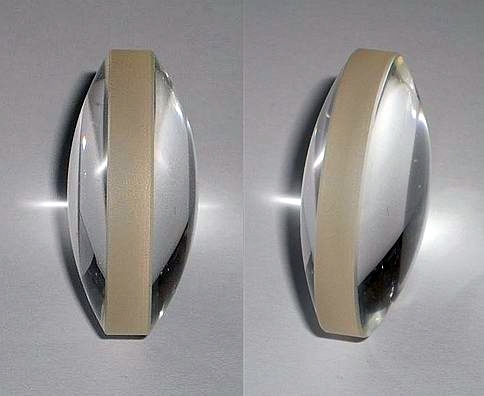
A lens is an optical device that focuses or defocuses the light that passes through it. Lenses are made of transparent materials, such as glass or plastic, and have curved surfaces that refract light in a specific way. There are two main types of lenses: converging lenses and diverging lenses.
Converging Lenses

Converging lenses, also known as positive lenses, are thicker in the center than at the edges. They are shaped like a rounded triangle and cause light rays to converge at a single point called the focal point. Converging lenses are used to magnify objects or images, such as in telescopes and microscopes. They can also be used to correct vision problems, such as nearsightedness and farsightedness, in eyeglasses and contact lenses.
Diverging Lenses
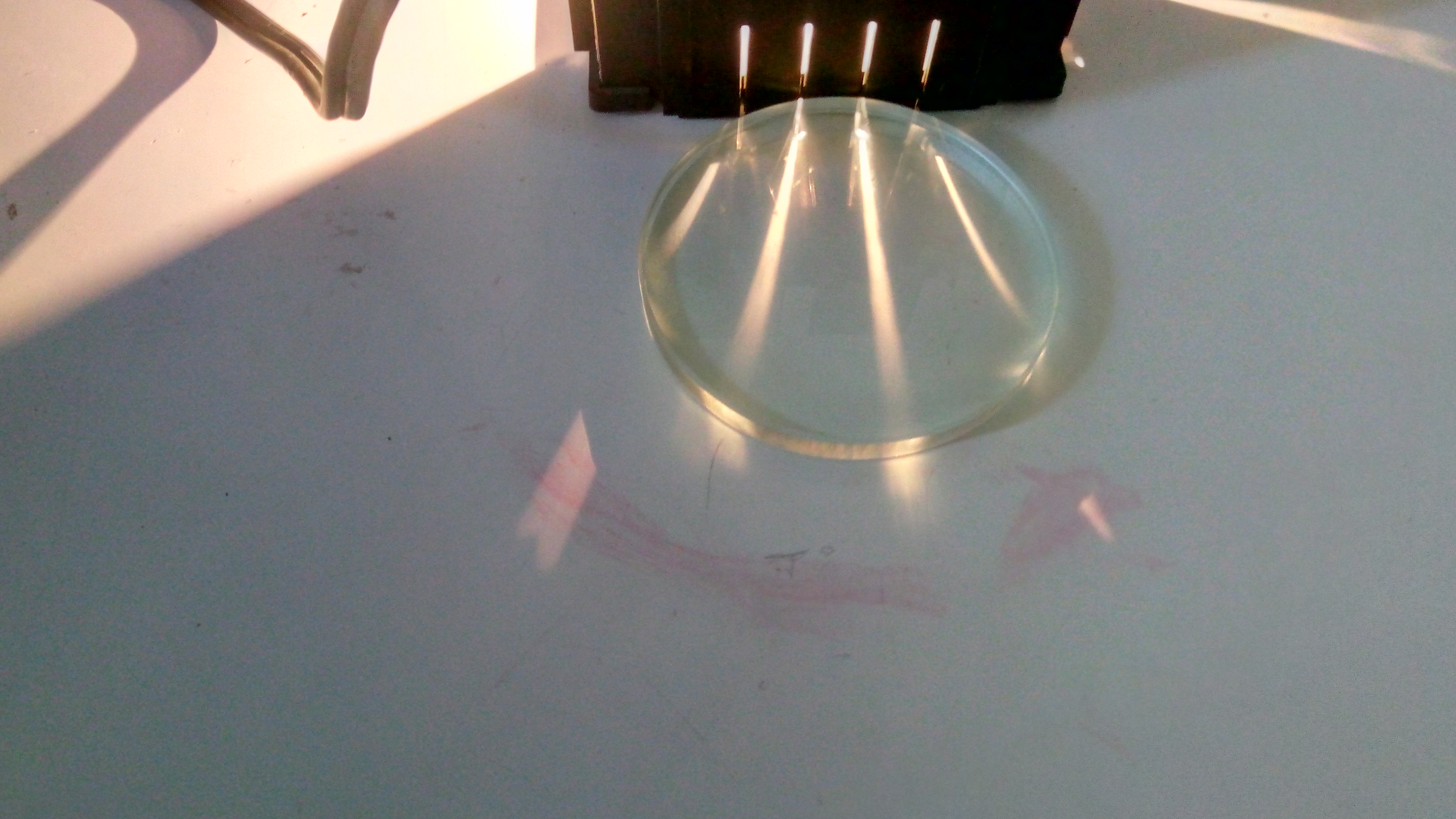
Diverging lenses, also known as negative lenses, are thinner in the center than at the edges. They are shaped like an inverted triangle and cause light rays to spread out or diverge. Diverging lenses are used to reduce the size of an object or image, such as in certain types of cameras. They can also be used to correct vision problems, such as when combined with converging lenses in eyeglasses and contact lenses.
Lens Formulas
There are several formulas that are used to calculate the properties of lenses, such as the focal length, image distance, and object distance. These formulas are based on the principles of geometric optics, which describe how light travels and is refracted by lenses and other optical devices.
One important formula for lenses is the lens equation:
1/f = 1/do + 1/di
where f is the focal length of the lens, do is the distance from the lens to the object, and di is the distance from the lens to the image. This equation can be used to calculate the size and location of the image formed by a lens, given the properties of the lens and the position of the object.
Applications of Lenses
Lenses have a wide range of applications in physics and engineering, including in optics, imaging, and communication systems. Some examples of the use of lenses include:
- Telescopes and microscopes
- Cameras and projectors
- Eyeglasses and contact lenses
- Laser pointers and barcode scanners
- Fiber optic cables and solar panels
Lenses have also played a key role in the development of modern technologies, such as the internet and smartphones, which rely on the transmission and processing of light signals.