
An Introduction to Quantum Physics
Quantum physics is a branch of physics that studies how the universe behaves at a very small scale, such as the scale of atoms and subatomic particles. It is based on the idea that energy, matter, and other physical quantities can have certain properties only when they are being observed or measured, and that they can exist in multiple states or locations at the same time. This is in contrast to classical physics, which is based on the idea that physical quantities have definite values at all times and that they can only be in one state or location at a time.
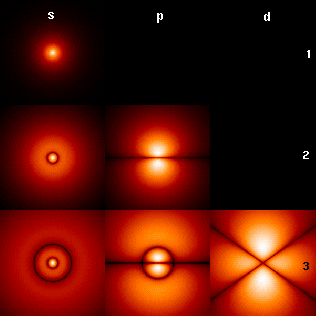
One of the key concepts in quantum physics is the idea of a wave function, which is a mathematical equation that describes the probability of finding a particle in a particular location or state. According to the principles of quantum physics, it is not possible to know both the exact position and momentum of a particle at the same time, a phenomenon known as the uncertainty principle. Instead, the best we can do is to predict the probability of finding a particle in a particular place or state based on its wave function.
Another important concept in quantum physics is the idea of entanglement, which is a phenomenon that occurs when two particles become connected in such a way that the state of one particle can affect the state of the other, even if the two particles are separated by large distances. This is one of the most mysterious and counterintuitive aspects of quantum physics, and it has led to the development of many new technologies and techniques, such as quantum computers and quantum cryptography.